- 1. Five Generations: From Mechanical Keys to Mobile Access
- 2. Magnetic Stripe Locks: Cheap but Fading
- 3. RFID Card Locks: The Global Mainstream
- 4. PIN Keypad Locks: The Self-Check-In Enabler
- 5. Bluetooth & Mobile Access: The Experience Differentiator
- 6. Biometric Locks: The Premium & Special-Scenario Plus
From first-generation magnetic stripe locks to Bluetooth mobile access, hotel locks have evolved through five generations. This article maps each technology's working principle, pros and cons, and best-fit scenarios.
1. Five Generations: From Mechanical Keys to Mobile Access
Hotel lock technology falls into five clear generations. First: traditional mechanical key locks, secure-but-clunky, surviving only in old inns and heritage buildings. Second: magnetic stripe locks, popular in the 1980s-90s, replacing metal keys with stripe cards — but stripes demagnetize and are copyable. Third: IC/RFID card locks at 13.56MHz, with chip-embedded cards that can be encrypted — today's global mainstream. Fourth: online and Bluetooth locks with built-in communication modules for remote management and mobile opening. Fifth: biometric and smart-integrated locks with fingerprint, face recognition, and guest-control linkage, mostly for premium hotels and smart rooms.
Understanding generations matters because marketing terms confuse: "smart lock" and "electronic lock" are vague. Procurement must pin down the exact technology — it determines cost, compatibility, and upgrade path. A 200-room property on magnetic locks must replace bodies, encoders, and software wholesale; a property already on RFID may only need new panels and mainboards to add Bluetooth.
Regional preferences also differ: the US/EU adopt RFID and Bluetooth readily; Southeast Asia still runs magnetic and PIN stock; the Middle East values face-recognition solutions. Include target-market preferences in the requirement analysis for export projects.
2. Magnetic Stripe Locks: Cheap but Fading
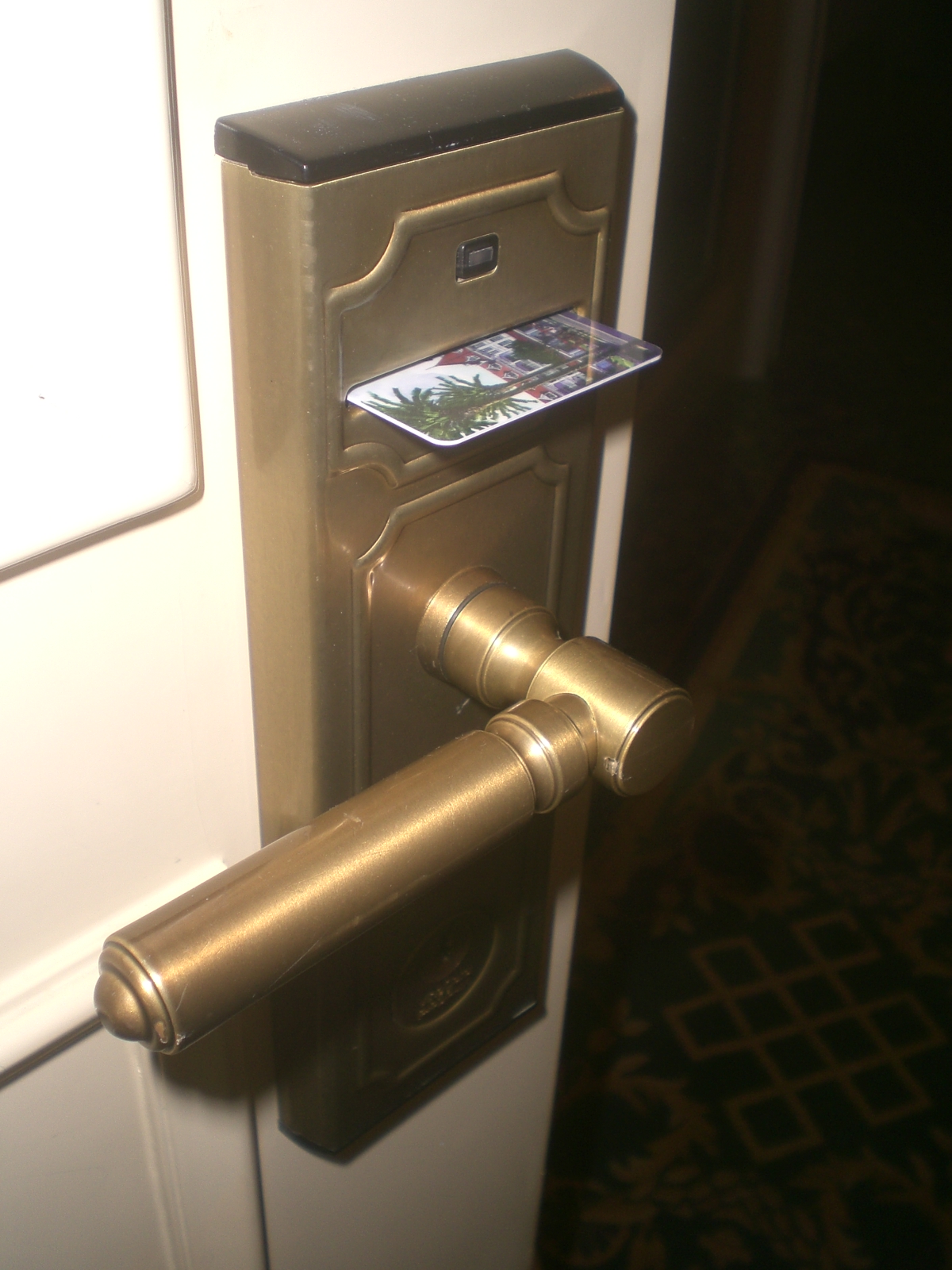
Magnetic stripe locks write room data onto the card's magnetic stripe; the reader head reads it and drives the latch. Pros: low cost, simple issuing — the global standard from the 1990s to early 2000s.
The cons are plain: stripes demagnetize near phones and wallet magnets, so guests return to the front desk for re-issuing; stripe data is copyable with card readers, a low security level; and magnetic cards integrate poorly with access control and elevators. Today they survive in legacy hotels and ultra-budget projects; mainstream makers have largely discontinued stripe cylinders, and spare parts are increasingly hard to source.
Legacy properties still on magnetic locks should plan a "magnetic-to-RFID upgrade" in the mid-term: cost is controllable (similar body specs allow same-mortise replacement) and guest experience and security improve overnight. When inquiring, state "replace magnetic with RFID, same mortise" and suppliers will offer a body-swap solution.
3. RFID Card Locks: The Global Mainstream
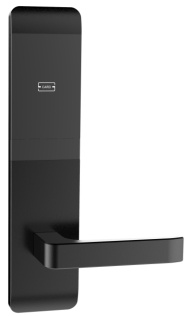
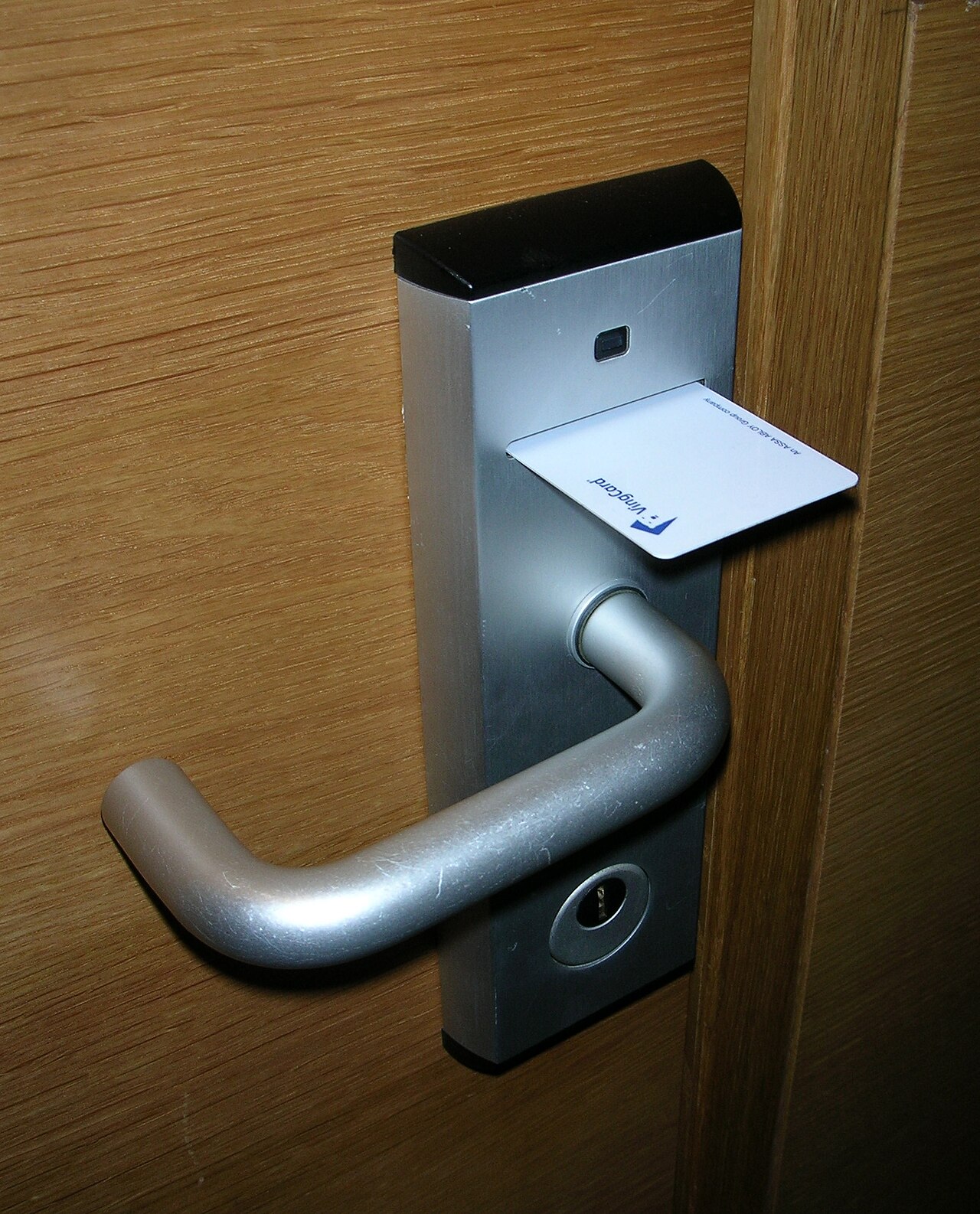
RFID card locks use 13.56MHz chip cards (Mifare being the most common). The reader and card communicate by RF — no contact, no wear, and the chip supports encryption and multi-application writing. Compared with magnetic cards, issuing efficiency, anti-copy capability, and service life all win.
The core advantage is system integration: one card can hold door, elevator, restaurant, access, and pool-locker applications — true one-card. For chain groups, unified encryption lets one card work across properties or authorize per property, shrinking management radius.
Four parameters to verify: card compatibility (Mifare S50/S70 or national/private encryption, matching the group's issuing system), read range (typically 3-10cm; too short hurts experience), anti-copy ability (dynamic encryption and card-serial binding), and offline behavior — cards must open and log data during network failure, syncing later.
RFID is the sweet spot of cost and reliability, and the optimal choice for most new builds and economy hotels.
4. PIN Keypad Locks: The Self-Check-In Enabler
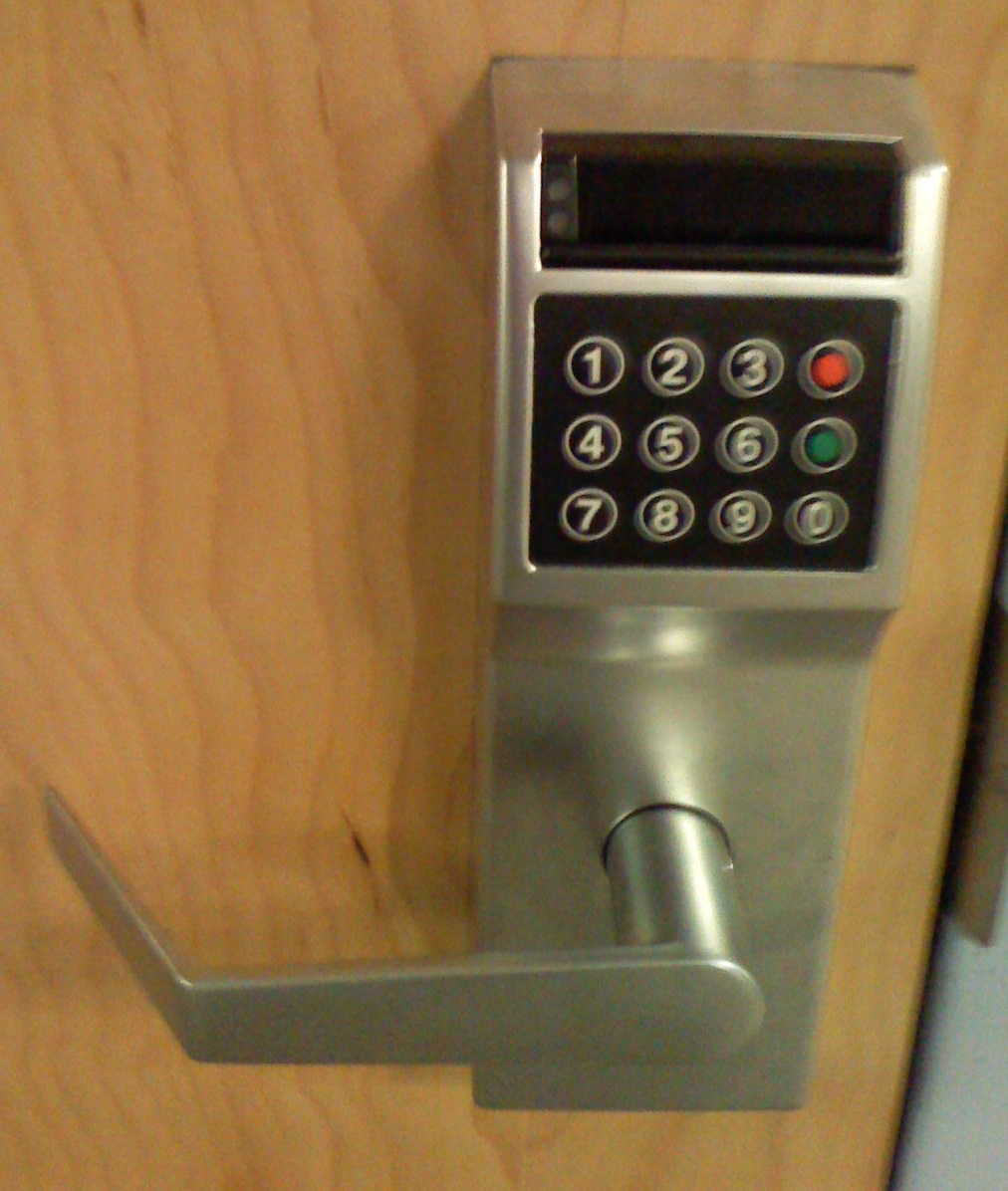
PIN keypad locks open by numeric code with no physical card — the natural fit for no-front-desk and self-check-in scenarios. Apartments, homestays, long-stay units, and airport transit hotels use them heavily: guests receive a code at booking, open the door on arrival, and the code dies at check-out with zero manual handover.
The real capability is in software: temporary codes (by hour/day/lease), schedule codes (cleaning hours), one-time codes (visitors), and remote issue/revoke. The admin panel should support batch generation and code-report export for finance and operations.
The security debate centers on leakage and shoulder-surfing: verify scrambled keypads (digits shuffle positions), lockout after wrong attempts (N minutes), and multi-factor combinations with card/Bluetooth. For premium projects, PIN usually complements other methods rather than being the only one.
Also mind keypad durability: corridor dust and humidity demand waterproof/dustproof panels (IP54+), million-cycle key life, and backlit keys.
5. Bluetooth & Mobile Access: The Experience Differentiator
Bluetooth locks (BLE) turn the phone into a room key: guests open via the hotel mini-program or APP without queuing at the front desk. For chains, this is the hook for member experience and first-party data — booking, room selection, opening, and check-out complete in one digital journey.
Two technical forms: BLE module built into the lock (phone opens nearby), and the "phone + BLE gateway" online scheme supporting remote issuing, live logs, and building-wide management. Hybrid (card + Bluetooth) is the premium mainstream: guests may use either, without interference.
Three engineering points: power and battery — BLE standby is low, but confirm low-battery alerts and emergency keys; anti-relay attacks — two-way authentication and dynamic keys against signal interception; and APP stability plus multi-language support, vital for hotels with many international guests.
On cost, BLE locks cost more than RFID, but save card consumables and front-desk labor; chains can also run unified member operations at group level. Evaluate ROI against hotel positioning.
6. Biometric Locks: The Premium & Special-Scenario Plus
Biometric locks open with fingerprints or faces — no card, no code. Fingerprint locks are mature and mid-priced, common on executive floors, family rooms, and long-stay units; face-recognition locks offer the best contactless experience and appear in premium lobbies and VIP floors, linked with elevator and access control for "face-pass-through".
Evaluate three realities before buying: recognition rate across age groups, skin tones, and makeup — ask for multi-population test data; privacy compliance — face data handling touches target-market regulations (e.g. EU GDPR), requiring local storage and deletion mechanisms; and cost/maintenance — biometric modules are pricier, and sensors smudge with dust and oil, needing regular cleaning.
Recommendation: deploy biometrics as one combination method in premium projects, not as a full-line standard. For mid-range hotels, card + PIN is sufficient; spend the budget on door signs, guest control, and other guest-visible modules for better ROI.
←
Electronic Door Number Tech: Display, Networking and Guest Control
→
How Do Hotel Door Locks Work: From Card Swipe to Door Opening