- 1. Three Layers: Mechanical, Electronic, and System
- 2. The Mechanical Core: Body, Bolt, and Motor
- 3. Card Reading & Authentication: What's on the Card and How It Resists Copying
- 4. Power & Emergency: Battery Strategy and the "Last Channel"
- 5. Management & Logs: Every Opening Is Recorded
- 6. Common Faults & Troubleshooting: Maintenance Knowledge to Buy With
What happens in the moment you swipe a card? This article breaks down the full chain — mechanical lock body, card authentication, and management system — from card swipe to door opening.
1. Three Layers: Mechanical, Electronic, and System
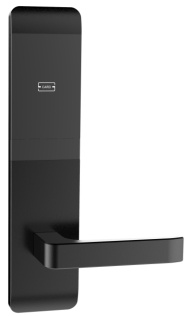
Every hotel electronic lock has three layers. The mechanical layer is the lock body and bolt, physically locking and unlocking. The electronic layer is the card reader, mainboard, motor, and batteries — recognizing credentials and driving the mechanism. The system layer is the issuing software and PMS integration, handling authorization, logging, and revocation. Failure at any layer breaks the opening chain — the basic framework for understanding lock operation.
The full card-opening chain: the guest holds the card to the reader → the reader reads and cryptographically validates the card → the mainboard checks authorization (card number + room + time window) → on success, a motor or solenoid retracts the bolt → the guest pushes in → closing re-deploys the bolt. The whole process takes under a second, each step depending on the previous.
Offline and online are two typical modes. Offline locks (the majority) embed authorization in the card and validate locally, needing no network. Online locks validate against a live server on every open — stronger security and finer management, but requiring building-wide wiring. Understanding these modes explains why suppliers answer "can it open when offline?" differently.
2. The Mechanical Core: Body, Bolt, and Motor
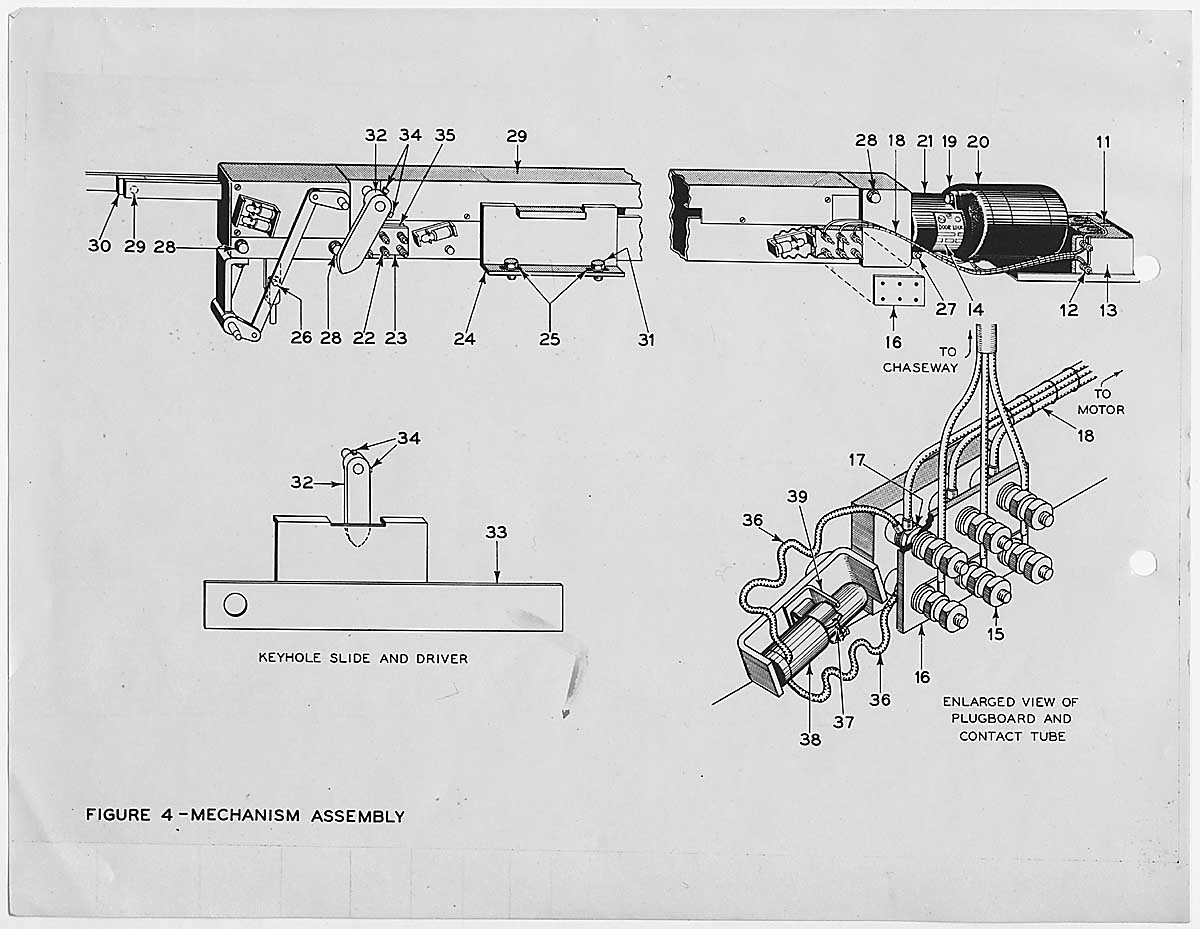
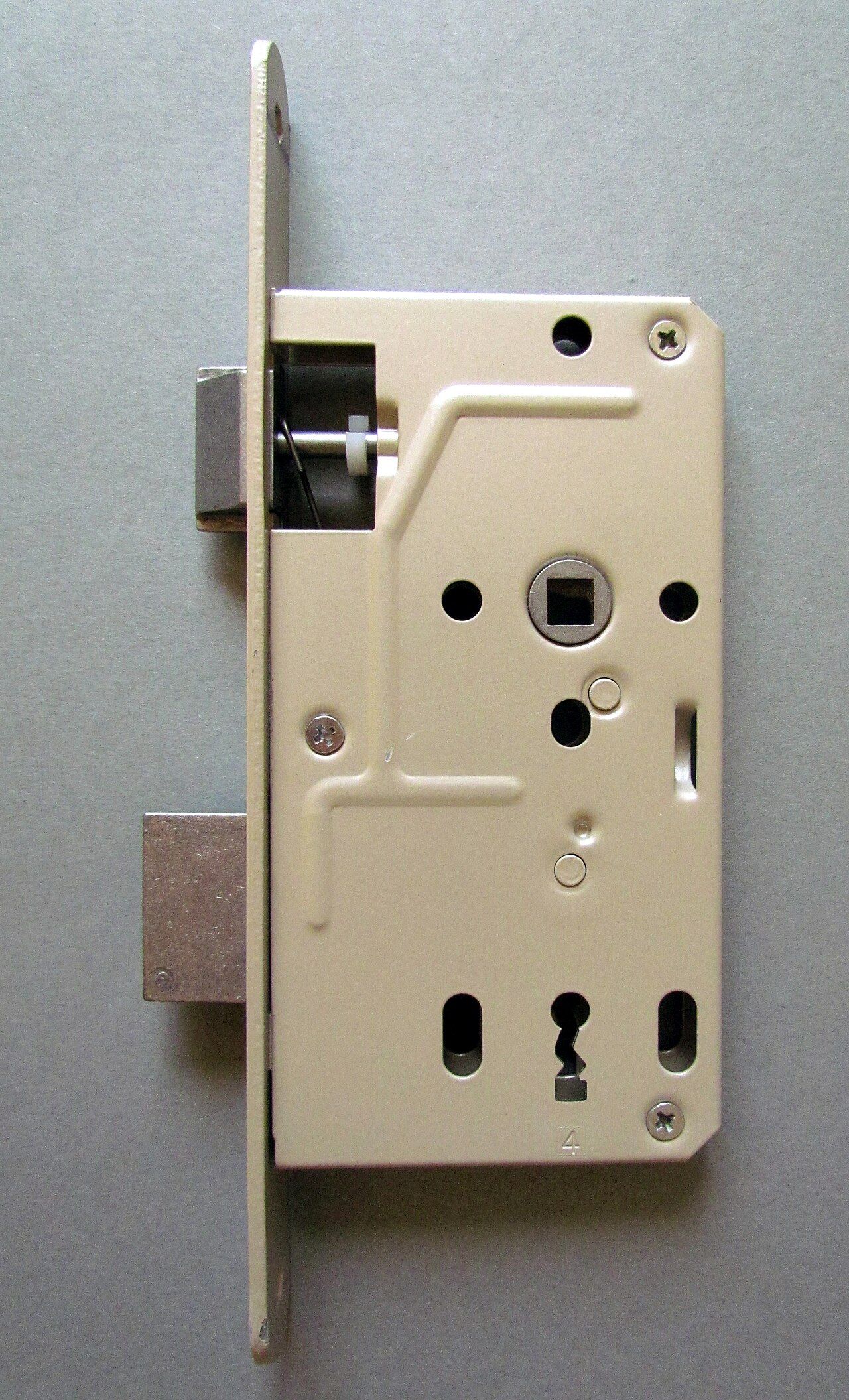
The lock body is the mechanical heart. Hotel lock bodies are typically die-cast stainless steel or zinc, housing the spring latch, deadbolt (optional), and drive mechanism. The spring latch auto-locks on closing: a spring pushes it out, the door frame strike presses it back during closure, then it pops out again — "closed means locked". The deadbolt is the anti-burglary主力: once extended, tools like cards cannot shim it back; it needs the motor or handle to retract.
The key electronic-mechanical action is motor retraction: after validation, a small DC motor or solenoid pulls the linkage, retracting the bolt. Motor schemes act softly and can self-lock; solenoid schemes respond fast and are simple but noisier and draw power while held. Premium locks favor motor + clutch: normally disengaged (handle spins freely, anti-pry), engaging on validation so turning the handle opens the lock.
The mechanical emergency structure matters too: most electronic locks keep a mechanical cylinder that retracts the bolt purely mechanically, bypassing all electronics. This last channel is the only way in when batteries die or the mainboard fails — so cylinder grade and key-management policy belong in procurement requirements.
3. Card Reading & Authentication: What's on the Card and How It Resists Copying
An RFID card is a chip plus an antenna coil. The chip organizes data in sectors: the lock application uses several sectors for room number, authorization window, card serial, and keys; remaining sectors host elevator, access, and payment apps — the technical basis of one-card systems.
Authentication is two-way: the lock sends a random challenge, the card encrypts it with the built-in key and returns it, and the lock decrypts to verify — challenge-response. Real anti-copy power comes from the key: undisclosed, configurable, and cards supporting clone-resistant certification (Mifare Plus, DESFire security levels) fail copies even when data is readable.
Ask three questions: card security level (Classic vs Plus/DESFire), key management (who generates, how injected, can rotate), and whether the card survives copying by off-the-shelf writers — if a key card can be cloned with a market writer, security is zero. For premium hotels, choose DESFire-class cards: marginal cost, transformative security.
4. Power & Emergency: Battery Strategy and the "Last Channel"
Typical power is four AA batteries (6V) lasting 12-18 months depending on opening frequency and motor draw. High-frequency rooms (dozens of cycles daily) versus long-stay rooms can differ by double, so a fixed replacement cycle never truly covers all rooms — tiered alerts and battery reporting beat fixed schedules.
The low-battery workflow is usually: below 20% prompts "replace batteries" on open; below 10% forces voice/screen reminders; the final stage keeps an "N more opens" guarantee. Verify all three tiers exist, and that prompts appear both inside (guest view) and outside (service view).
Emergency "last channels" come in several forms: mechanical key (kept cylinder), external power (Type-C/USB temporary power), and master card (system-level). Pick two of three and institute registration and audit for keys and master cards — emergency channels save lives in critical moments and are exactly where security management is weakest.
5. Management & Logs: Every Opening Is Recorded
The hidden value of electronic locks is data: every opening's card number, time, and method is recorded in the lock (offline) or server (online). Logs matter far beyond "who entered a room" — they are dispute evidence, lost-property clues, and compliance vouchers for housekeeping.
Four key log designs: local storage capacity (offline locks hold 1,000-5,000 entries; do old entries get overwritten?); data upload mechanism (handheld collector, wired/wireless gateway auto-upload); audit integrity (are admin operations and system-time changes recorded?); and time sync (clock drift makes timestamps untrustworthy — schedule recalibration).
For chains, centralized logs enable analysis: opening distributions by floor and hour, anomalous patterns (late-night, unauthorized cards), feeding security alerts and maintenance scheduling. Put "log export format (CSV/API)" into the requirement sheet — it saves heavy customization when connecting group systems later.
6. Common Faults & Troubleshooting: Maintenance Knowledge to Buy With
Common electronic lock faults by frequency: dead batteries (the majority of maintenance events), card unreadable (damaged card, key mismatch, dirty reader), bolt not retracting (door sag or dry mechanism), weak motor (damage from long low-battery operation), and loose panel (screws or hole misalignment).
Most faults have precursors: weaker sound on opening, needing repeated card contact, stiff handle rotation. Training housekeeping to spot these "precursor signals" during daily rounds cuts guest-lockout complaints dramatically. Ask suppliers for a troubleshooting manual and part-replacement videos; overseas projects should confirm remote diagnostics (lock status readable via APP/backend).
Three selection-level tricks to reduce faults: choose models with mature motors/drive trains and large installed base (parts easy, experience abundant); verify standardized body/door installation (hole misalignment is a root cause); and put "in-warranty failure rate" into supplier review — let data speak, not promises.
←
Types of Hotel Door Locks: Magnetic, RFID, PIN, Bluetooth and Biometric
→
Hotel Smart Lock Installation Guide: From Mortise Check to Commissioning