- 1. Two Scenarios, Two Logics: Home vs Apartment Decisions
- 2. Unlock Combinations: Fingerprint + PIN + Card + Key as the Safe Baseline
- 3. Lock Body Choice: Self-Latching vs Deadbolt-Protected
- 4. APP & Admin Panel: Four Must-Check Features
- 5. Materials, Cylinder & Security Rating: Three Hard Metrics Against "Fake Smart"
- 6. Door Fit: 35-70mm Thickness and Swing Direction — Measure Before You Buy
Apartment operators care about management efficiency and cost; the home market cares about security and looks. From a project buyer's view, this article breaks down the trade-offs of unlock methods, lock body, APP, and door compatibility for bulk deployment.
1. Two Scenarios, Two Logics: Home vs Apartment Decisions
Home smart locks and apartment smart locks look like the same product, but procurement logic is almost opposite. Home users are both buyer and user: they care about security level, appearance, and convenience for family and friends, with relatively low price sensitivity and willingness to pay for brand and quality. Apartment operators buy but do not use: they care about installation cost, failure rate, batch operations in the management dashboard, and per-room access cost — appearance ranks last.
The difference shows in every dimension: homes prefer multi-modal biometric locks (fingerprint, face); apartments prefer the stable card + PIN + key combination, because tenants change frequently, cards can be recycled and PINs reset anytime. Home APP is single-household management; apartments need a multi-unit backend supporting batch issuing, expiry revocation, and access-log export.
One often-missed point: apartment procurement usually demands body uniformity — one model for the whole building to simplify spare-parts management and maintenance training. Evaluate the model's long-term supply and end-of-life risk before choosing, so repairs never run out of parts.
2. Unlock Combinations: Fingerprint + PIN + Card + Key as the Safe Baseline
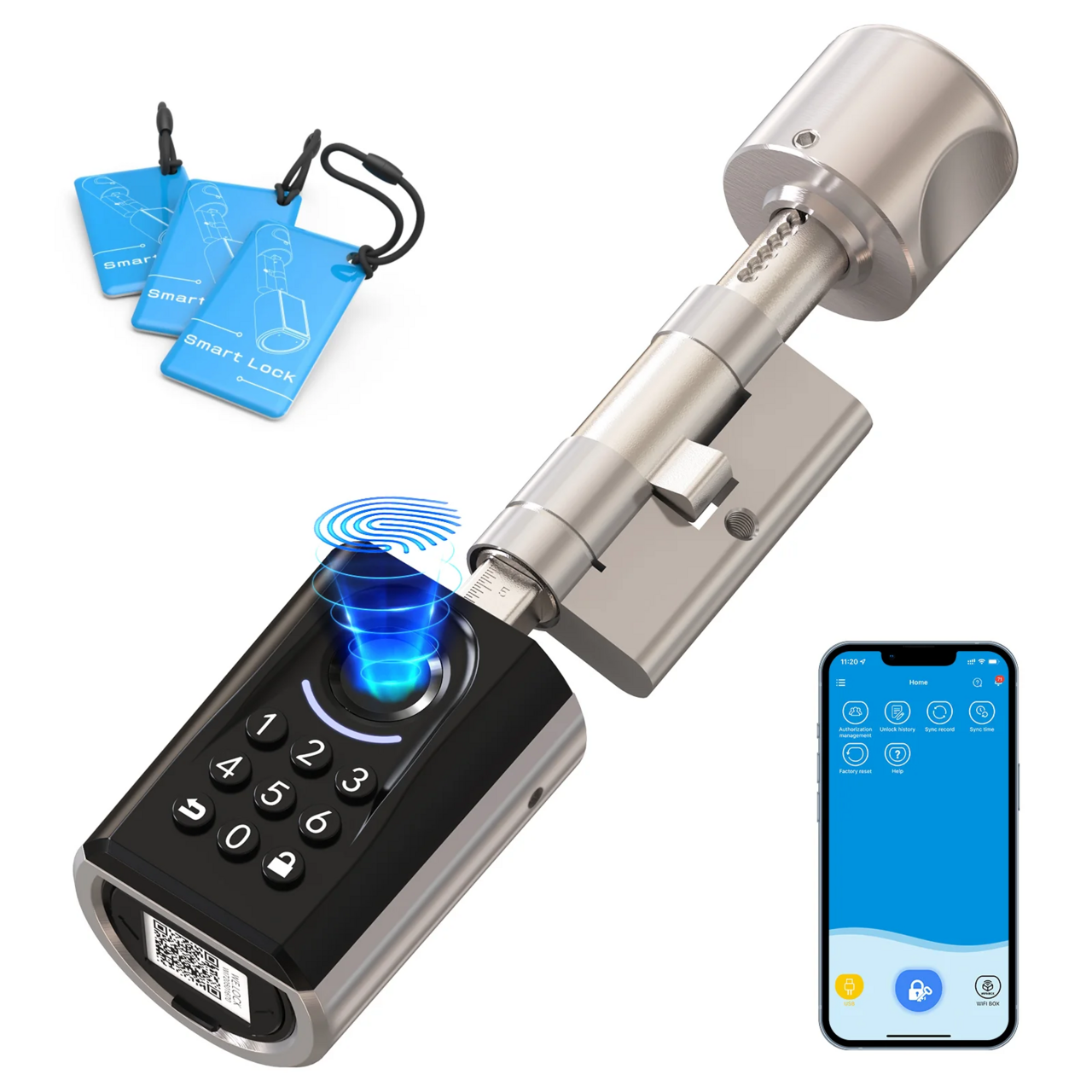
No unlock method is inherently better; it's about fit. Fingerprint is the highest-frequency method in homes — fast and effortless — but aged fingers and children's developing prints can fail, so it must be backed up by PIN and card, never the only option.
PIN suits guests and temporary access: temporary and schedule-based codes (cleaning hours) are home-lock pluses. For operators, resetting the PIN after move-out beats collecting physical keys. Card unlocking matters most in long-term rental apartments, many of which already run access-card systems — a lock compatible with the existing card means one fewer card to issue.
An emergency mechanical key is the baseline of any combination, and the only way in during power failure, dead batteries, or electronic faults. Check keyhole placement: front-facing holes are common for homes; bottom or side holes are more discreet.
For apartment projects, add APP PIN management: remote issue/revoke with auto-expiry by lease period drastically cuts on-site visits — the core software difference between apartment and home locks.
3. Lock Body Choice: Self-Latching vs Deadbolt-Protected
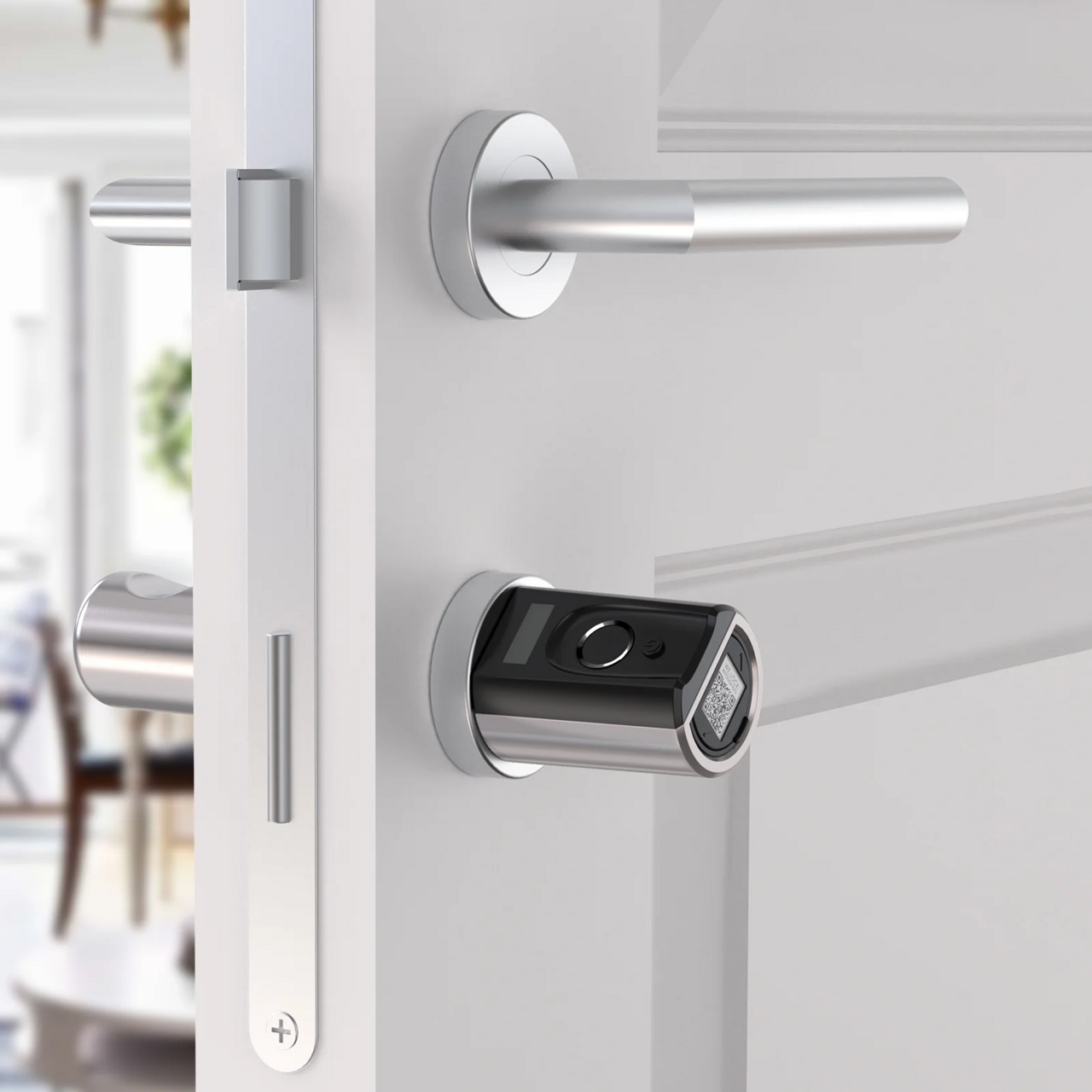
The lock body is the other half of a smart lock's "smartness". Two common types: self-latching bodies (e.g. 5050) auto-lock on closing without deliberate deadbolting, install easily, and need minimal mortise work — ideal for retrofitting wooden doors without heavy modification.
Reversible bodies with deadbolt protection offer better security: the deadbolt extends with an anti-shim plate when locked, defeating common latch-slipping attacks. High-floor residents, standalone homes, and security-conscious families should prioritize this type; the trade-off is an extra habit step (turn the handle or press a button) when leaving.
Check reversibility: the body should support both left- and right-hand doors so one model covers all orientations in a building, reducing inventory SKUs. Body thickness must match the door (typically 35-70mm) — measure the door thickness and existing mortise with a caliper before purchase; it beats any datasheet.
4. APP & Admin Panel: Four Must-Check Features
APP experience determines operational efficiency. Verify four features: first, batch management — can you issue/revoke permissions for multiple units at once, or only one by one? Second, temporary PINs with custom validity (hours/days/lease period) that expire automatically. Third, access logs — who, how, and when, exportable as reports; a hard requirement for dispute resolution. Fourth, low-battery push — the APP alerts proactively instead of waiting for tenant complaints.
For operators, a multilingual admin panel and tenant self-binding are strong pluses: tenants scan and bind their unit via APP, operators approve centrally, drastically cutting delivery and maintenance labor. For families, what matters is app stability, Bluetooth/remote response speed, and sharing fingerprints and PINs among members.
On security, confirm two things: communication encryption (encrypted link between APP and lock, updatable keys), and the account system (phone registration, WeChat login, tiered family permissions). These determine whether remote unlocking is safe enough to actually use.
5. Materials, Cylinder & Security Rating: Three Hard Metrics Against "Fake Smart"
A smart lock is first a lock, then smart. Three hard metrics: first, cylinder grade — C-grade in China, ABUS/ANSI levels abroad correspond to different pick-resistance times; ask for the exact cylinder model and tested grade. Second, panel material — die-cast zinc with multi-layer plating is mainstream; thin stamped panels under 1.0mm resist forced entry poorly. Third, tamper alarm — does the lock sound and push APP alerts when the panel is pried or the body vibrated?
Certifications matter: GA374 in China, ANSI/BHMA, EN 14846, or UL overseas. Export projects must specify target-market certification in the inquiry. Be aware some "smart locks" only pass consumer-grade testing, far below hotel/commercial security standards.
One more often-ignored point: corrosion resistance. In coastal cities and high-humidity environments (hot springs, resorts), salt-spray ratings of screws, spindles, and handles determine service life. Ask for the salt-spray test report — it beats any render.
6. Door Fit: 35-70mm Thickness and Swing Direction — Measure Before You Buy
A great lock that cannot mount is worthless. Three fit items: door thickness (commonly 35-70mm; adapt via cylinder lengths and strike plates — check accessory availability for ultra-thin or extra-thick doors), existing mortise (hole spacing vs the new panel, and body hole pattern like 6068), and swing direction (left/right/inward/outward determines handle orientation and body reversal).
For renovation projects, send the supplier three photos: door front, lock body area from the side, and the strike plate on the frame. An experienced supplier can judge compatibility at a glance and state clearly whether it is a "no-drill upgrade" or requires re-drilling. Standard rental wooden doors are highly compatible; security doors vary by manufacturer hole patterns and have the highest retrofit failure rate.
Finally, check the box contents: strike plate, screws, batteries, emergency keys, and installation drawing — plus spacers if the door is uneven. One missing accessory means an extra technician visit.
←
Hotel Smart Lock Buying Guide: 6 Key Points from Lock Body to System
→
Electronic Door Number Tech: Display, Networking and Guest Control