- 1. Beyond the Room Number: The Dual Role of Door Signs
- 2. Acrylic Signs: The Budget Choice with Texture and Life Limits
- 3. Metal Signs: The Texture Baseline, the Durability Mainstream
- 4. LED & Electronic Signs: From Static to Smart
- 5. Size & Specs: Readability Beats Size
- 6. Door Sign Procurement Checklist: Ten Items
Door signs shape guests' first impressions. From acrylic to e-ink, this article compares four mainstream sign materials/schemes on cost, texture, durability, and fit.
1. Beyond the Room Number: The Dual Role of Door Signs
Hotel door signs play two roles. Functionally, they let guests locate rooms quickly along the corridor, with lighting and typeface ensuring nighttime readability. Visually, they are the first touchpoint of the guestroom zone — material, font, and lighting telegraph the hotel's grade and style, which is why luxury hotels budget more on signs than on locks.
From a procurement view, six factors matter: budget (per-room cost differs by up to 10x), style (modern/classic/minimal), durability (service life in corridor conditions), maintainability (single-unit replacement), customizability (font, logo, language), and smart needs (room-status display, guest-control linkage).
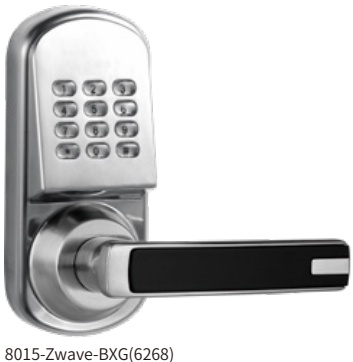
Note that bundling signs with locks is now industry practice (the "lock + sign" inquiry). The benefit is not only price: construction is unified — sign power, mounting height, and template holes are planned once with the locks, avoiding two contractor visits.
2. Acrylic Signs: The Budget Choice with Texture and Life Limits
Acrylic (PMMA) signs are the common choice for economy hotels and homestays: low material cost, flexible processing (laser cutting, engraving, silk-screen), wide color options, mature two-layer colorboard technique, and short lead times.
The limits are plain: low surface hardness means scratches from cleaning cloths and luggage; long-term UV exposure yellows and embrittles the material; thin sheets deform in wide temperature swings. Overall, acrylic signs last about 3-5 years, which does not fully match the hotel's 5-8 year renovation cycle.
If budget forces acrylic, focus on three details: sheet thickness (at least 5mm, 8-10mm recommended for texture), anti-UV coating, and surface finish (matte scratches less visibly than gloss). Also plan "acrylic-to-metal/LED upgrade" as a mid-term renovation path.
3. Metal Signs: The Texture Baseline, the Durability Mainstream
Metal signs are the mainstream for 4-star-and-above: stainless steel and aluminum. Stainless (304 mainly) offers strength, corrosion resistance, and a cool modern texture; aluminum is light and workable with brushed, anodized, and painted finishes for richer color and texture options.
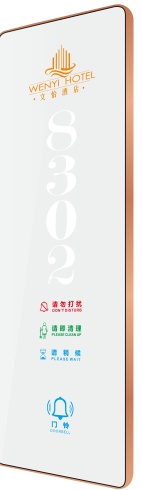
Process defines grade: stamping (batch, low cost), laser engraving (fine detail), plating/painting (color and protection), and backlit technology (metal plate cutout + acrylic liner + LED light guide — metal texture by day, glowing digits by night). Backlit metal signs are the premium mainstream, balancing daytime texture with nighttime readability.
Verification items: material certificates (304/316 grade), surface finish and salt-spray ratings (critical for coastal hotels), backlight module life and power draw (LEDs rated 30-50k hours; driver matching local voltage), and mounting method (adhesive/screw/hang, matched to door material).
4. LED & Electronic Signs: From Static to Smart
LED and electronic signs upgrade the door sign from "identifier" to "information terminal": beyond the room number, they display occupancy, DND/MUR, welcome messages, and multilingual info. Display options span segment LCD (low cost, static info), dot-matrix/LCD (arbitrary content, animation), and emerging e-ink (ultra-low power, static).
The real value lies in linkage: with lock and card-insert integration, check-in flips the displayed status automatically; with RCU integration, DND reaches the service desk for a closed service loop. For chains, electronic signs also carry digital operations — OTA review prompts, brand content, and energy-saving tips on rotation.
Selection points: adaptive brightness (no glare at night), default room-number display on power loss, fonts for target-market languages (Arabic, Thai), power scheme (centralized vs local), protocol compatibility with guest control, and single-unit replaceability — if one broken sign in a corridor requires returning a whole batch, costs run out of control.
5. Size & Specs: Readability Beats Size
Sign size is not "bigger is better" — it's about readability in corridor conditions. Four parameters govern: digit height (≥25mm for 5m readability), viewing distance (set by corridor width), contrast (dark background, light digits), and lighting (backlight or corridor ambient).
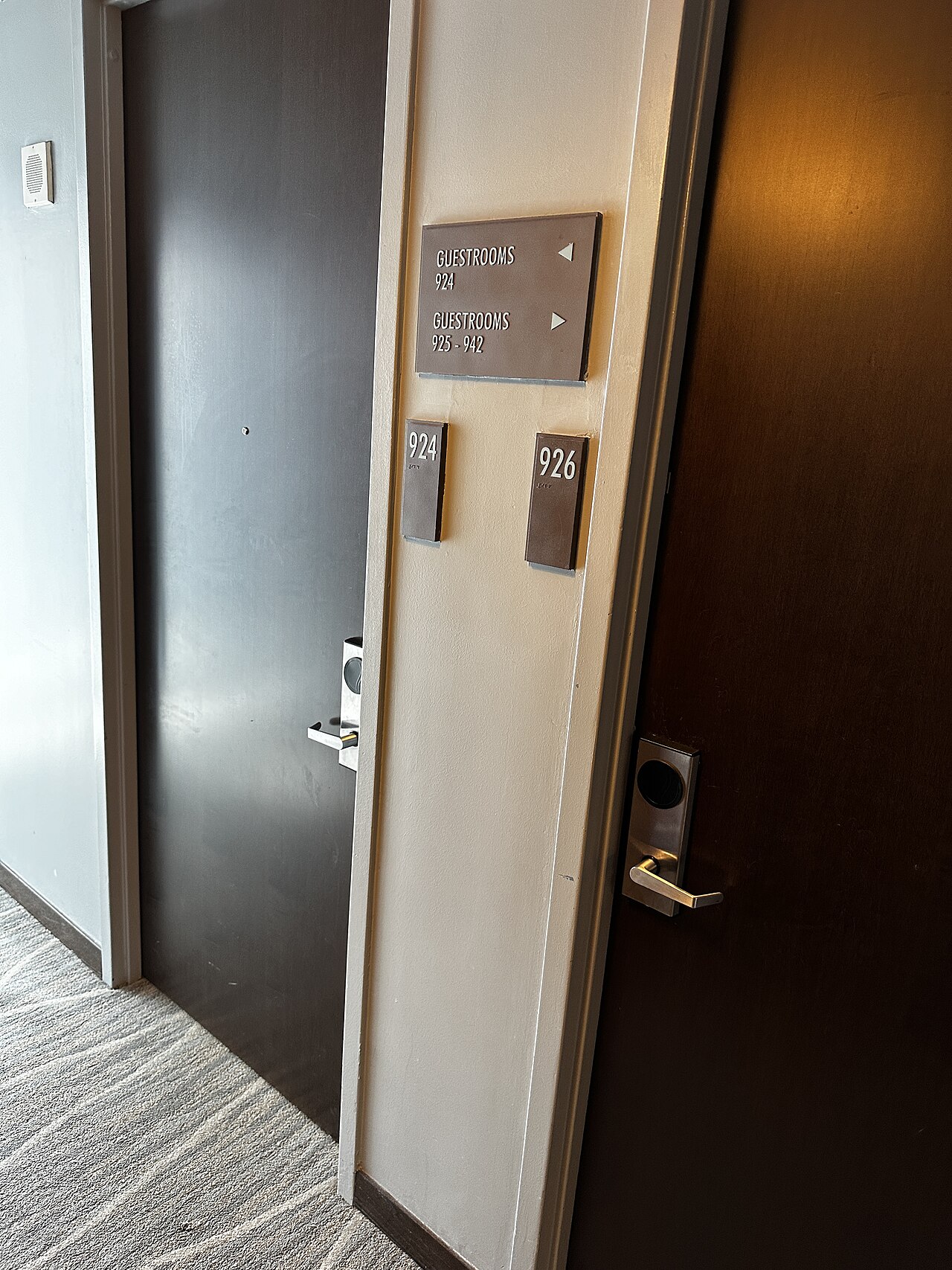
Reference sizes: standard single-room sign 150-200mm × 60-100mm; functional signs with DND/MUR display 200-300mm × 100-150mm; electronic signs follow screen size (4.3"-7"). Mount the sign center 1.4-1.6m above floor, in the same zone as the lock handle, visible at a glance.
Overseas projects must respect local regulations: the US ADA sets specific contrast, font, and mounting-height requirements for accessible signage; some markets mandate minimum digit heights for hotel rooms. Confirm compliance with target-market specs at inquiry to avoid acceptance failures.
6. Door Sign Procurement Checklist: Ten Items
Ten items to verify: 1) material & process (sheet/panel, finish, backlight); 2) size & digit height (incl. DND symbol size); 3) display content (number, status, language, logo); 4) power (voltage, draw, centralized/local); 5) interface protocol (guest-control linkage and test records); 6) mounting method & template; 7) environmental ratings (IP, salt spray, UV); 8) certifications (CE/RoHS and target-market compliance); 9) spares & warranty (single-unit replacement, years); 10) lead time & installation guidance (remote support for overseas).
Put items 1-9 into the technical agreement — protocol and certification cost the most when they fail after delivery.
Final reminder: unified selection, unified inquiry, and unified acceptance for signs, locks, and card-insert power is the most effective way to control project complexity. One supplier offering the full "lock + sign + power" package keeps linkage responsibility clear and after-sales faster.
←
Hotel Smart Lock Installation Guide: From Mortise Check to Commissioning
→
What Is a Guest Room Control System: From Card Power to Smart Rooms