- 1. What Is Guest Control: One System, Three Buses
- 2. Architecture: Room, Floor, and Platform Levels
- 3. Linked Scenarios: Locks, Signs, and Guest Control in Harmony
- 4. Deployment: Wired, Wireless, and Hybrid
- 5. Energy & Operational Value: Convincing the Boss with Numbers
- 6. Procurement Points: Protocols, Certifications, Joint Commissioning
The guest room control system is the "central nervous system" of smart rooms. From RCU hosts and panels to linked scenarios, this article breaks down its architecture, value, and procurement points.
1. What Is Guest Control: One System, Three Buses
A Guest Room Control System is a per-room smart control platform whose core device is the RCU (Room Control Unit) host. The RCU aggregates signals from all controlled devices in the room, taking inputs from panels, door contacts, and presence sensors to control lighting, AC, curtains, outlets, and door signs.
The simplest mental model is three buses: the control bus (panel-to-RCU communication, commonly RS485/KNX or proprietary), the linkage signals (dry contacts or interfaces from locks, signs, and card-insert switches), and the network return (RCUs upload room status to the management platform via gateways).
Card-insert power is the classic entry: the guest inserts a room card, the RCU validates it, powers the room, and enters "occupied mode"; on card removal, power delays off into "eco mode". This seemingly simple action is the foundation of energy management and room-status judgment.
2. Architecture: Room, Floor, and Platform Levels
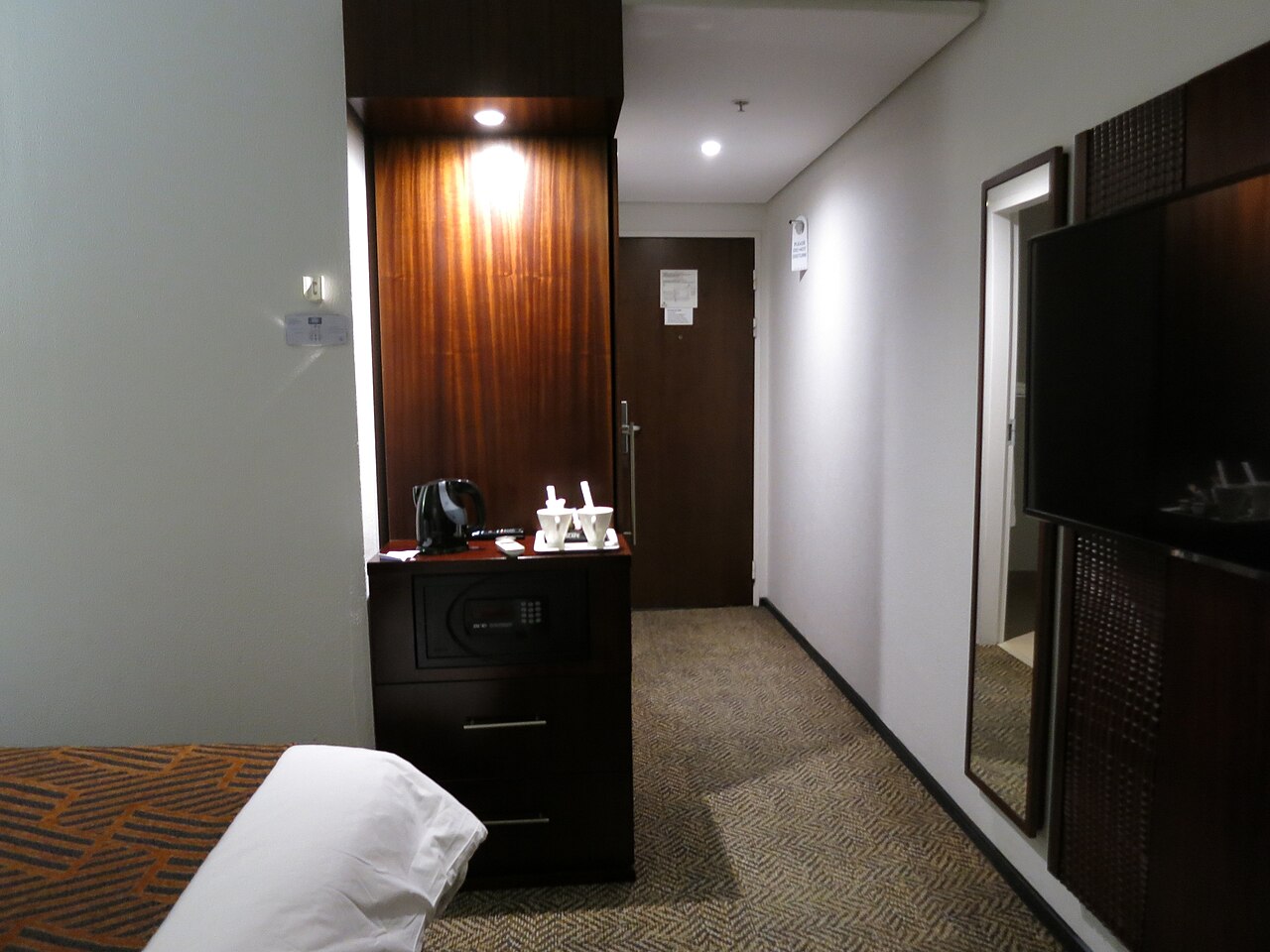
Guest control stacks in three levels. Room level: RCU host + control panels (the bedside master panel with lighting/AC/curtain/scene buttons is standard) + inputs (door contact, presence sensor, card switch, sign linkage) + outputs (relays, dimming modules, curtain motor drivers).
Floor level: floor gateways/switches in the low-voltage room aggregate room RCUs over wired or wireless backbone. Large hotels use one gateway group per floor so a gateway outage affects only that floor, preventing single-point spread.
Platform level: the management platform (on-premise or cloud) provides room-status monitoring, energy statistics, device alarms, remote policy distribution, and PMS integration. The platform is the operational brain — without it, guest control is just panels; with it come energy reports and a closed maintenance loop.
Clarify the deployment model at procurement: on-premise private (data security, one-time cost) vs cloud (zero ops, annual fee) — the trade-offs differ for chain-group unified management.
3. Linked Scenarios: Locks, Signs, and Guest Control in Harmony
The value of guest control shows through linked scenarios. The five most common: check-in linkage — after front-desk check-in, room lighting enters welcome mode and AC adjusts to the default temperature, so guests feel comfort on entry; card-insert power — power on with card, delayed power-off without; the DND loop — pressing "Do Not Disturb" shows DND on the sign and syncs to the service desk; check-out all-off — the room returns to eco state automatically; and security linkage — abnormal door status (not closed) and overstay alarms report to the platform.
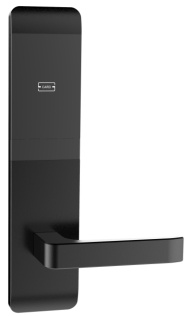
These scenarios require open interfaces among locks, signs, and guest control: the lock provides unlock/card events, the sign shows DND and status, and the RCU executes control. Protocol alignment and joint commissioning among the three vendors decide project success — strongly recommend making "three-party joint commissioning" a delivery condition in the tender.
For chains, linked scenarios should support headquarters-level configuration: energy policies (AC temperature limits, unattended auto-off windows) distributed from the group platform with only local fine-tuning, keeping brand standards consistent.
4. Deployment: Wired, Wireless, and Hybrid
Deployment determines construction time and retrofit cost. Wired (RS485/KNX bus) offers the best stability and response, ideal for new builds — wiring during construction, one-shot system, clear maintenance paths; the catch is renovations cannot run conduit, and schedules run in months.
Wireless (mainly Zigbee/BLE Mesh) installs flexibly without destroying finishes, measured in weeks; the costs are environmental dependence (metal structures and thick walls attenuate) and power — wireless panels still need power (battery panels raise maintenance; wired panels still need cabling).
Hybrid is the pragmatic choice for large renovations: critical equipment (RCU, lock linkage) wired, decorative panels and signs wireless, floor-level wireless convergence with wired backbone. Ask suppliers for acceptance data from similar retrofit cases (coverage rate, drop rate) rather than spec sheets.
Whichever, confirm OTA upgrades and remote diagnostics — a guest control system runs 8-10 years, and firmware/platform iteration capability directly drives long-term maintenance cost.
5. Energy & Operational Value: Convincing the Boss with Numbers
The ROI of guest control shows through energy savings and efficiency. Three savings: AC (unattended setback/power-off strategy — usually the biggest item, industry experience cuts AC energy 20-40%), lighting (all-off on card removal plus presence linkage), and standby devices (TV and set-top outlets controlled off).
Three efficiencies: transparent room status (front desk and housekeeping see occupancy/cleaning/DND live, cutting communication), energy reports (by room type, floor, and period — data for pricing and purchasing), and predictive maintenance (faults and offline alarms found by the platform before guests complain).
Pitch the numbers: for a 300-room hotel, initial investment around RMB 2,000-5,000/room; AC savings at ~25% with annual per-room electricity of RMB 4,000 pay back in 3-5 years; adding labor savings and fewer complaints shortens payback to 2-3 years. Ask suppliers for real before/after energy data from same-scale projects as the basis of calculation.
6. Procurement Points: Protocols, Certifications, Joint Commissioning
Four procurement points for guest control: open protocols — confirm RCU interfaces (protocols and docs for locks, signs, PMS, elevator integration); closed protocols restrict every future integration. Certifications — CE/FCC/RoHS basics plus UL/EN for overseas, including safety approvals for low-voltage box devices. Joint commissioning responsibility — the tender must define responsibilities and acceptance criteria for the three-party integration (e.g. linkage response under 2 seconds). Future scalability — can the system add scenarios (voice control, AI energy optimization) without replacing hosts?
Attach the acceptance test checklist to the contract: every linked scenario, response time, offline degradation, and energy baseline, ticked at acceptance.
Finally, evaluate the supplier's ongoing service: guest control is a system you depend on more over time — response, version iteration, and spare-parts cycles determine its value in year 8. Prefer suppliers with hotel-industry installed base and service coverage in the target region.
←
Hotel Door Sign Materials: Acrylic, Stainless Steel, LED and E-Ink
→
Keyless Entry Door Lock Buying Guide