- What is a keyless door lock?
- How to choose the unlocking method: fingerprint, password, card and APP
- Lock body and security level: C-level lock cylinder and anti-pry alarm
- Power supply and battery life: battery, emergency power supply and low battery reminder
- Installation and door type adaptation: self-installation or hiring a master
- Shopping list and budget reference
Keyless door locks have become a standard feature in homes and apartments. Fingerprint, password, card, and APP unlocking methods each have their own pros and cons, and the lock level and power supply scheme directly determine the user experience. This article is aimed at first-time buyers and provides a clear purchase list based on the four dimensions of unlocking method, lock body, battery life, and installation.
What is a keyless door lock?
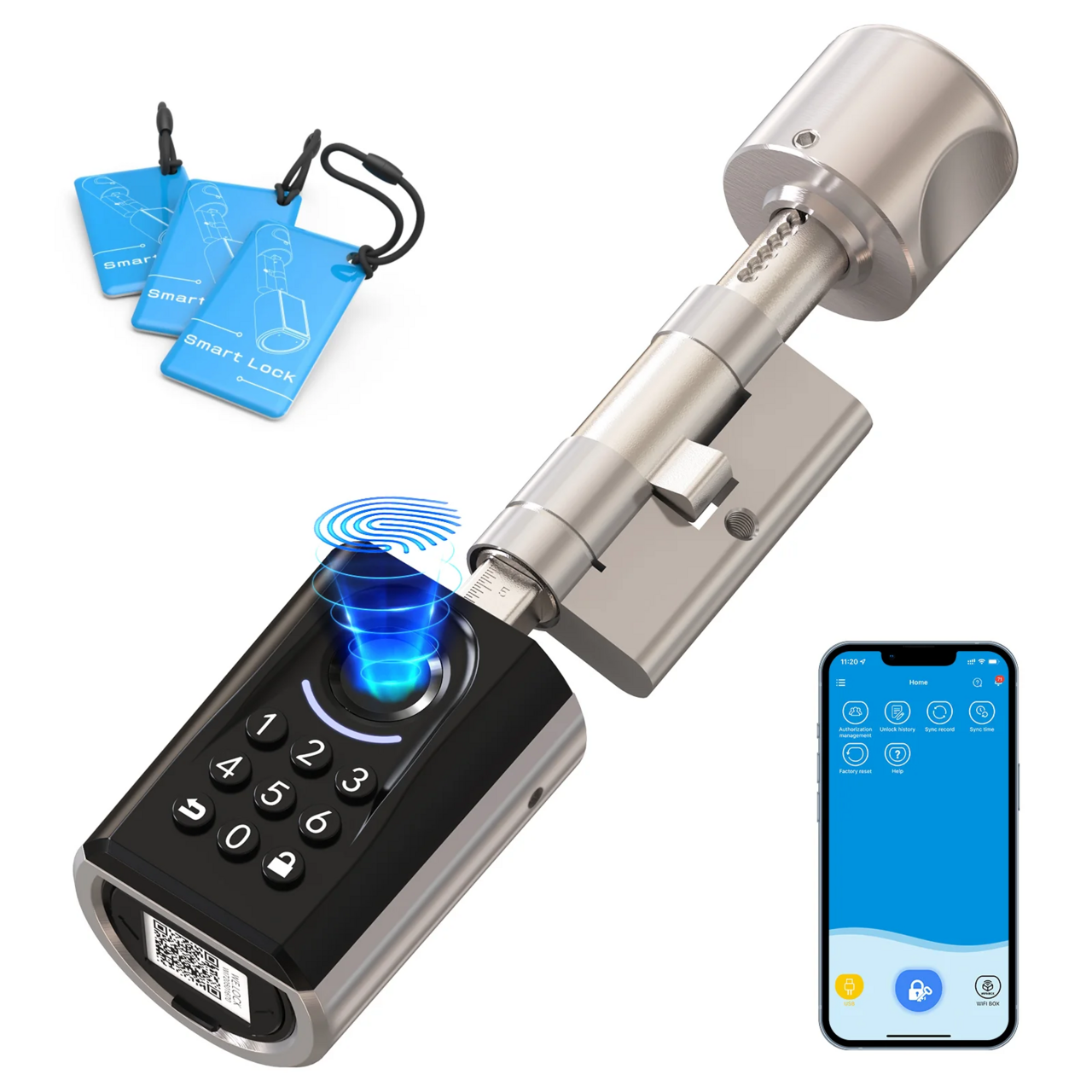
Keyless Entry Lock refers to a product that does not require a traditional mechanical key to open the door. Common unlocking methods include fingerprint, password, card swiping, mobile APP and remote authorization. Its core value is "No more being unable to enter the door if you forget to bring your key." It also supports multi-user permission management, which is especially suitable for families, rental apartments and B&Bs.
Before purchasing, you need to clarify the usage scenario: self-occupation, rental or short-term rental? Different scenarios have very different needs for permission management, temporary passwords and remote control, which determines budget allocation.
The data and suggestions in this article are based on the product characteristics of mainstream American standard door locks and domestic smart locks to help you make the most appropriate choice within your budget.
How to choose the unlocking method: fingerprint, password, card and APP
Fingerprint recognition is the fastest way. The recognition speed of the semiconductor fingerprint module is about 0.5 seconds, and there is no problem of forgetting the key; the password (PIN) is suitable for temporary authorization such as visitors and cleaning, and can set a time-limited or one-time password; the card is suitable for the elderly and children, and the cost of the magnetic card or IC card is low; APP and remote authorization are suitable for owners who need to remotely open the door or view unlocking records.
From a security perspective, the anti-copying capabilities of semiconductor fingerprint and encrypted IC cards are significantly better than ordinary magnetic cards; it is recommended to choose a password of more than 6 digits and turn on the anti-peep mode.
Recommended combination: Mainly fingerprints for daily use, passwords for visitors, cards for the elderly and children, and APP as a remote security guard - a set of locks with the above four methods can cover most scenarios.
Lock body and security level: C-level lock cylinder and anti-pry alarm
The physical security of smart locks depends on the lock body and lock cylinder. Domestic standards divide lock cylinders into three grades: A/B/C. Grade C lock cores have the longest anti-lock opening time; American standard products can refer to ANSI/BHMA Grade 1-3, with Grade 1 having the highest strength.
When purchasing, you should confirm whether the lock body is suitable for the existing door type: common door thickness is 40-70mm, and the size of the guide piece needs to match the opening of the door. It is best to take pictures and measure it before modification and installation.
It is recommended to choose a model with anti-pry alarm, multiple incorrect password locks and low battery reminder. These functions are particularly important in unattended rental scenarios.
Power supply and battery life: battery, emergency power supply and low battery reminder
Mainstream smart locks are powered by 4-8 AA batteries or lithium batteries, and their battery life is usually 6-12 months, depending on the frequency of unlocking and the intensity of wireless function usage.
Emergency plans must be considered: 9V battery emergency interface or Type-C emergency power supply, which can provide temporary power to unlock the door when the battery is exhausted to avoid being locked out.
APP-linked models will push low-battery reminders, and it is recommended to replace the battery within a week after receiving the reminder; it is recommended to enable low-power mode when leaving home for a long time.
Installation and door type adaptation: self-installation or hiring a master
The replacement installation of a standard American lock body (2-3/8" or 2-3/4" back distance) takes about 30-60 minutes. Most products support user self-installation; non-standard doors, iron doors or glass doors require professional installation, and even custom side panels.
Before purchasing, measure three data: door thickness, back distance (from the center of the keyhole to the edge of the door), and the size of the guide piece. Send photos to customer service to confirm the fit, which can avoid 90% of installation problems.
In apartment and short-term rental scenarios, it is recommended to install the same model in batches to facilitate operation and maintenance and spare parts stocking.
Shopping list and budget reference
Divided by budget: the entry-level model (supports fingerprint + password + mechanical key, about 100-200 US dollars) is suitable for renting; the mid-range model (adds APP, remote authorization and anti-pry alarm) is suitable for self-occupation; the high-end model (3D face, video intercom, whole-house linkage) is suitable for families with sufficient budget.
The final list is recommended to include: ≥ 3 unlocking methods, C-level lock cylinder, low battery reminder and emergency power supply, anti-pry alarm, and after-sales warranty ≥ 2 years.
Before placing an order, confirm whether the brand has a local after-sales outlet. The installation and after-sales service of the smart lock are more important than the parameters.
←
What Is a Guest Room Control System: From Card Power to Smart Rooms
→
Smart Door Lock vs Keypad vs Fingerprint